World Post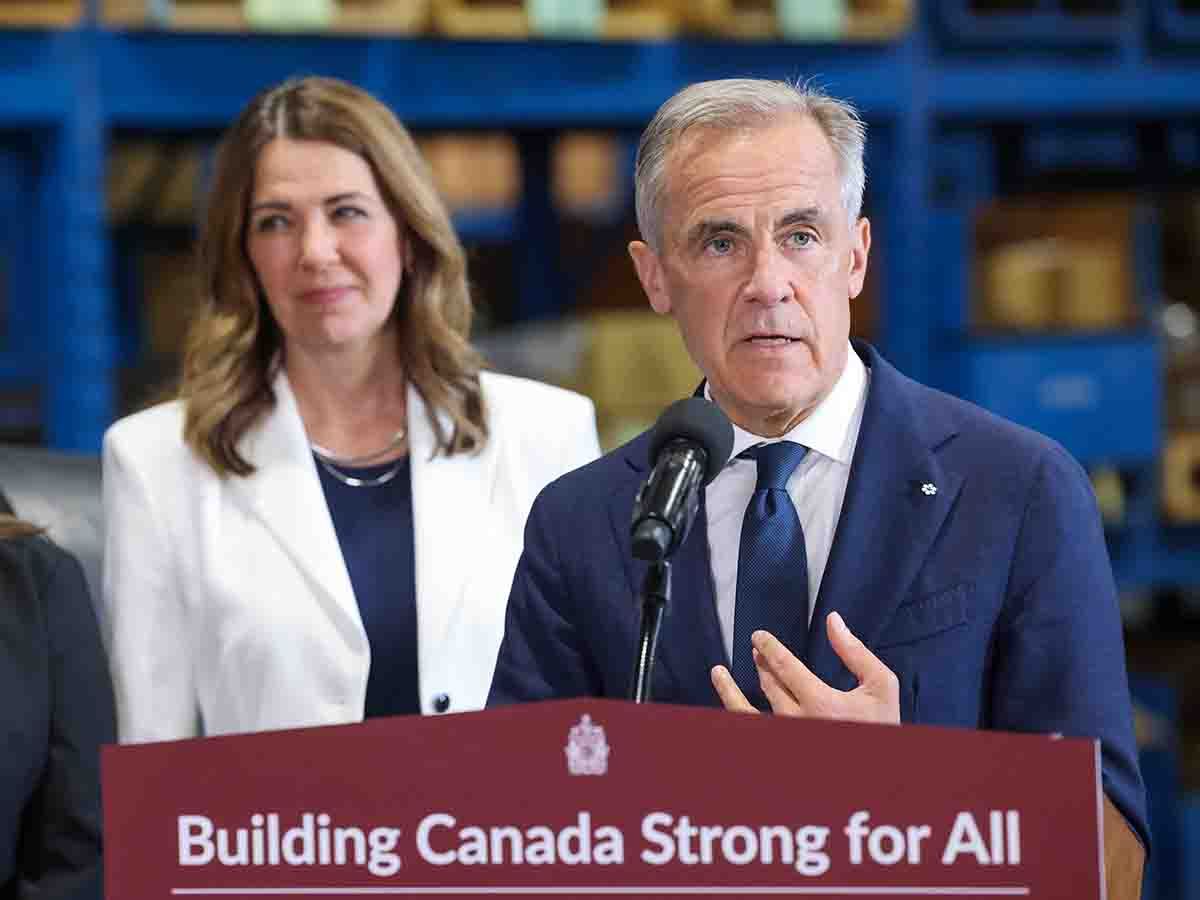
Skip to Content News Archives Economy Energy Oil & Gas Renewables Electric Vehicles Mining Commodities Agriculture Real Estate Mortgages Mortgage Rates Finance Banking Insurance Fintech Cryptocurrency Work Wealth Smart Money Wealth Management Investor Personal Finance Family Finance Retirement Taxes High Net Worth FP Comment Executive Women Puzzmo Newsletters Financial Times Business Essentials More Innovation Information Technology FP500 Podcasts Small Business Lives Told Tails Told Shopping Financial Post Store Obituaries Place a Notice Advertising Advertising With Us Advertising Solutions Postmedia Ad Manager Sponsorship Requests Classifieds Place a Classifieds ad Working Profile Settings My Subscriptions My Offers Newsletters Customer Service FAQ News Economy Energy Mining Real Estate Finance Work Wealth Investor FP Comment Executive Women Puzzmo Newsletters Financial Times Business Essentials Home Energy Ottawa expected to fast-track West Coast oil pipeline on Thursday Ottawa is widely expected to designate the proposed $44B pipeline as a project of national interest, putting the government-backed line on an accelerated regulatory track Last updated 16 minutes ago Prime Minister Mark Carney and Alberta Premier Danielle Smith announce the submission of a West Coast pipeline project in Calgary on Thursday, July 2, 2026. Photo by Gavin Young / Postmedia Ottawa is widely expected today to designate the proposed $44-billion West Coast oil pipeline as a project of national interest, putting the government-backed export line on an accelerated regulatory track and moving it closer to construction. Subscribe now to read the latest news in your city and across Canada.
Exclusive articles from Barbara Shecter, Joe O'Connor, Gabriel Friedman, and others. Daily content from Financial Times, the world's leading global business publication. Unlimited online access to read articles from Financial Post, National Post and 15 news sites across Canada with one account.
National Post ePaper, an electronic replica of the print edition to view on any device, share and comment on. Daily puzzles, including the New York Times Crossword. Subscribe now to read the latest news in your city and across Canada.
Exclusive articles from Barbara Shecter, Joe O'Connor, Gabriel Friedman and others. Daily content from Financial Times, the world's leading global business publication. Unlimited online access to read articles from Financial Post, National Post and 15 news sites across Canada with one account.
National Post ePaper, an electronic replica of the print edition to view on any device, share and comment on. Daily puzzles, including the New York Times Crossword. Create an account or sign in to continue with your reading experience.
Access articles from across Canada with one account. Share your thoughts and join the conversation in the comments. Enjoy additional articles per month.
Get email updates from your favourite authors. Create an account or sign in to continue with your reading experience. Access articles from across Canada with one account Share your thoughts and join the conversation in the comments Enjoy additional articles per month Get email updates from your favourite authors Sign In or Create an Account or The line would carry up to one million barrels of crude a day from Alberta to the B.C. coast for export.
For context, that’s more than the expanded Trans Mountain line’s 890,000 barrels a day. The designation, expected later today, meets the Oct. 1 deadline Prime Minister Mark Carney’s government set for itself in May. Get the latest headlines, breaking news and columns.
By signing up you consent to receive the above newsletter from Postmedia Network Inc. A welcome email is on its way. If you don't see it, please check your junk folder.
The next issue of Top Stories will soon be in your inbox. We encountered an issue signing you up. Please try again Carney has said the project would diversify the Canadian economy and create nearly 150,000 jobs across the country.
“Mega projects support jobs across the country,” said Raj Singh, chief executive officer of Calgary-based Fuelled Inc. “We run a global energy equipment marketplace, and we can see the immediate uptick for manufacturers and service providers in regions when these jobs kick off.” With the designation, the pipeline would join a roster of fast-tracked natural gas, mining and transmission projects meant to boost the economy and reduce Canada’s reliance on the U.S. as a trading partner. It falls under the Building Canada Act, which the Liberals passed last year as one of Carney’s first legislative priorities.
Under the act, designated projects are to “be advanced through an accelerated process that enhances regulatory certainty and investor confidence.” The federal Major Projects Office, headquartered in Calgary, is leading the process. Ottawa set up the new office and passed legislation to speed approvals last year, in response to U.S. President Donald Trump’s aggressive trade stance and steep tariffs on Canadian goods.
The project is expected to be financed almost entirely by the public sector. Ottawa and Alberta have agreed to split most of the investment, and Pembina Pipeline Corp. is the only private-sector participant, having signed a non-binding agreement to take a 10 per cent stake. Once the pipeline is in commercial operation, the company does hold the option to double its stake.
Alberta had lobbied hard for the designation. Premiere Danielle Smith argued the line would cut Canada’s dependence on the U.S. market and give Alberta crude access to higher international prices. At an energy services industry event in Calgary on Monday, Smith said she expected Ottawa’s decision “very soon.” For producers, the line’s main appeal is market diversification.
It would expand Canada’s capacity to sell crude to buyers other than the United States, its dominant customer. Canadian heavy crude has long sold at a steep discount to U.S. benchmark West Texas Intermediate, because roughly 90 per cent of Canada’s oil exports go to the United States. Pipeline bottlenecks have periodically left Canada’s oil producers captive to American refiners.
“Improved differentials gives the companies here more cash that can be reinvested,” said Singh. “That’s good for everyone.” The proposed line would add one million barrels a day to Canada’s crude exports, which averaged close to five million barrels a day in 2025. The new capacity would substantially expand Canada’s reach into overseas markets.
A key piece of the ownership structure is Indigenous equity. When Carney and Smith jointly unveiled the pipeline proposal in July, Carney promised meaningful ownership to the 129 Indigenous communities along the route. The terms of that ownership have remained open for discussion.
Indigenous communities seeking equity in major projects can draw on a growing mix of public financing. Ottawa recently doubled its Indigenous loan guarantee program to $10 billion, and The Canada Infrastructure Bank has earmarked at least $3 billion for revenue-generating Indigenous infrastructure. Provincially, the $3-billion Alberta Indigenous Opportunities Corp. guarantees the debt communities use to buy in.
The proposed route largely follows the footprint of the federally owned Trans Mountain pipeline, running from Bruderheim, northeast of Edmonton, to the Roberts Bank export terminal south of Vancouver. Using an existing corridor proved the most politically viable option, as the British Columbia government has refused to allow an oil pipeline to terminate on the province’s north coast. Mega projects support jobs across the country As premier, David Eby said his NDP government would not stand in the way of a southern route.
The decision followed an infrastructure agreement Carney struck with the province this summer, which includes an expansion of the Roberts Bank port corridor. The port expansion is backed by a $10-billion federal commitment. B.C. also secured an agreement that the new oil pipeline will not terminate on the north coast.
The last major proposal for a northern route, Enbridge Inc.’s Northern Gateway, was rejected by Justin Trudeau’s Liberal government a decade ago. The B.C. Conservatives said leader Lorne Doerkson supports the pipeline and getting Canadian resources to market.
“A pipeline to Roberts Bank means jobs and investment for both our province and the country, and the revenue to pay for hospitals and services British Columbians count on,” campaign officials said in a statement. The proposed project faces significant opposition from environmental groups, which focus on four key concerns: climate emissions, marine risk at Roberts Bank, taxpayer exposure and a fast-tracked process that sidesteps environmental law. Chris Severson-Baker, executive director of the Pembina Institute, said in May that the decision means oilsands emissions, which reached an all-time high in 2025, “will continue to rise year over year for at least another 15 years.” Julia Levin, associate director of national climate at Environmental Defence, has said the government is moving at “breakneck speed” and avoiding “due oversight.” Join the Conversation This website uses cookies to personalize your content (including ads), and allows us to analyze our traffic.
Read more about cookies here . By continuing to use our site, you agree to our Terms of Use and Privacy Policy .
Source: Financial Post