World Post
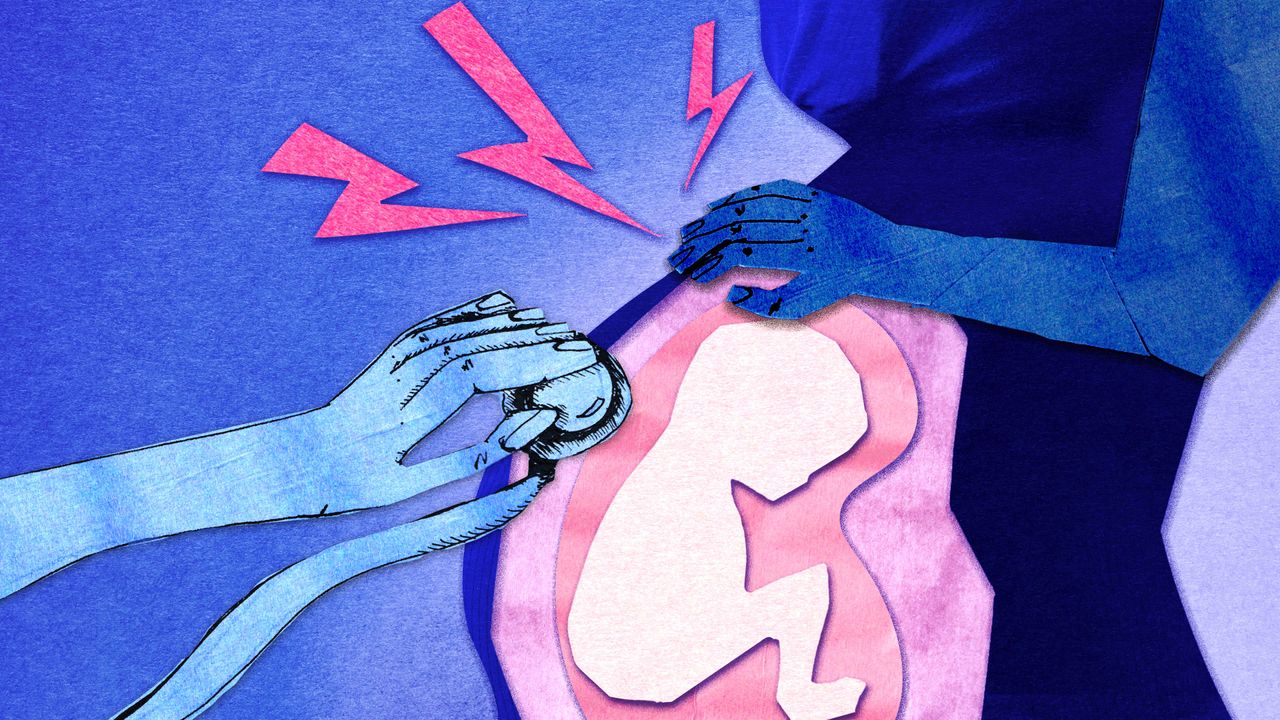
2 hours ago Melissa Hogenboom Serenity Strull/ BBC (Credit: Serenity Strull/ BBC) From incontinence to chronic pain, millions of women are still suffering decades later. Warning: This article contains details of traumatic medical experiences some readers may find upsetting. It's 2024 and I'm in the hospital, again.
I've been in pain that even morphine can't touch for about 36 hours. As the surgeons will find out when they open me up, parts of my bowel have protruded into a gap in my stomach lining. It's caused it to perforate, leaving pus inside my entire abdomen, resulting in a dangerous infection.
As I wait for the operation, I texted my husband all my bank details, just in case I don't make it. The pain is blinding. I am retching periodically though I haven't eaten for two days.
The surgery takes five hours. I wake up at midnight, groggy in the intensive care ward, with a six-inch (15cm) incision from my belly button to my pelvis and a large drainage tube in my abdomen. How did I get here?
And what does this have to do with childbirth? While it's well known that childbirth can be dangerous, what's less talked about are the physical issues that can last beyond those early years and affect women even decades later. While my own specific situation is rare, complications from childbirth that appear later in life are alarmingly common.
It's been estimated that globally, around 40 million women per year are affected by complications that last months or years. These can range from urinary and faecal incontinence to chronic pain, or even scar tissue that can cause life-threatening bowel problems or interfere with future fertility. Some of these issues, like mine, don't show up until years later and can persist indefinitely.
I spoke to several women, as well as experts, to get a full picture of the lasting physical and mental damage childbirth can cause. I heard how women often feel they aren't listened to, or worse, feel they had no way to access treatment. I didn't intend to revisit my own experiences for this column, because I hate feeling vulnerable.
But by talking about complications and creating greater awareness of both the risks of childbirth and how to access support, I hope that other women can feel more empowered to advocate for themselves. Lifesaving interventions, lifelong effects It's a tale as old as time. Childbirth is risky and can lead to complications or worse, for mother and child.
Luckily maternal deaths have become rarer in many parts of the world. Between 2000 and 2023, the ratio of maternal deaths to live births dropped by 40% globally. Yet the focus on reducing maternal deaths has meant that the longer-term effects of labour and childbirth often receive too little attention, according to a major 2024 global review by a team of international researchers.
Joshua Vogel, a perinatal epidemiologist at the Burnet Institute in Australia and lead author of the review, said it's worrying how many women are unable to advocate for support for themselves, especially because it can be unclear what is normal, and what should be looked at. "It blew my mind how mind-bogglingly diverse these complications are," he says. Adhesions In my case, things began with an emergency caesarean section.
Four days after my daughter was born, I was back in hospital undergoing another emergency surgery. My stitches had come fully undone and I suffered a serious complication with my bowels. It was traumatic and classed as a medical "never event" as it was so rare.
But I was delighted my tiny newborn daughter was fine, so I put it behind me and focused on how lucky it was that we were both OK. Seven years passed, including another pregnancy, and everything seemed back to normal. Then one Wednesday afternoon I had an onset of sudden abdominal pain that gradually worsened.
I was working and remember joining a video call lying down on bed and with my camera off, hoping it would soon pass. By 16:30, I texted my husband "it's really bad, I can see my stomach moving". I still just thought I had a bad stomach bug.
Though in hindsight, I realise I was no longer thinking rationally. That's perhaps why I somehow mustered the energy to collect the children from school, even lifting my child's bike into my car. But the pain just got worse.
Eventually, my husband contacted his sister, who is a doctor. She said it could be adhesions – scar tissue – from my caesarean, causing an obstruction within my intestines. When I began vomiting, she instructed me to call an ambulance.
There were none available so I took a taxi, even though by this point I could barely stand. At the hospital, a bowel obstruction was confirmed. The original caesarean, followed by the medical error that led to my second surgery, had left substantial scar tissue inside my abdomen which was now constricting the flow of blood to my bowels.
Sometimes obstructions go away on their own, so I spent an excruciating 36 hours waiting to see if I would need surgery. On the second day, my temperature spiked and my blood test showed that the levels of C-reactive protein, a marker of inflammation, had risen dangerously from 1 to 311 (a normal level is below 5). The decision was made to operate as soon as possible (though "soon", in a busy hospital, took another painful five hours...).
Afterwards, the surgeon told me how well the surgery had gone, though it was more complex than they had realised. They cut out 60cm (23.5in) of the part of my bowel that had been deprived of blood and oxygen, but the surgery had saved my life. Again, with time I healed well and the stoic in me thought, "it could have been worse".
But the medical complications were not over. Serenity Strull/ BBC Complications from childbirth that appear later in life are alarmingly common (Credit: Serenity Strull/ BBC) Major abdominal surgery Worldwide , caesarean sections are on the rise and account for about 21% of all births. In some countries this figure rises to 58% (Dominican Republic).
In the US it's over 32%. Caesarean sections can be vital to protect the health of mother and child, but they can come with an increased risk of complications, says Soo Downe, professor of midwifery at the University of Lancashire. When there are complications, they may not materialise immediately.
A US study that followed 43,646 mothers for 50 years found that those who had caesarean sections had a 16% higher risk of dying during that time than those who delivered vaginally. They also had a higher risk of dying from cardiovascular disease, diabetes, respiratory disease, infections and kidney disease. Stefanie Hinkle, a perinatal epidemiologist from the University of Pennsylvania in the US and co-author of the study says it isn't yet clear why.
Women who had caesareans were more likely to be older, have a higher BMI, smoke, or have diabetes or other pre-existing conditions, but the link remained after the researchers accounted for these factors. One possibility is that a caesarean is a marker of poorer overall health. "Another is that the surgery itself affects long-term health, for example through complications such as infection, blood clots or cardiovascular events, or through scar tissue and complications in later pregnancies," says Hinkle.
Clearly, there are numerous long-term risks associated with cesarean sections. They can result in a greater risk of an ectopic pregnancy, which is where a fertilised egg grows outside the uterus. Scarring from caesareans can increase the risk of placenta accreta , where the placenta attaches too deeply into the wall of the uterus.
I, and many women I know, didn't give the risks much thought because caesarean sections have become so normalised, making it easy to forget that it's a major abdominal surgery. Lack of follow-up In a cruel irony, the surgical treatment I needed after the first bowel obstruction created yet more scar tissue inside my abdomen. That's why four months later, the same issue occurred and I was back in the operating theatre undergoing another emergency operation.
Luckily there was no infection or perforation this time as the team opened me up that same day. I was told it could happen again tomorrow, several decades later or never again, as I now have a lifelong risk of future occurrences . Anyone who undergoes abdominal surgery can develop scar tissue, as my case shows.
One 2017 study of women from Sweden found that 37% of women who had previously had a cesarean had abdominal adhesions , compared to 10% of women who hadn't had one before. As adhesions can bind internal organs together, they can result in abdominal pain and bowel obstructions, as well as a slight increased risk of maternal and infant mortality in future pregnancies, a risk that's higher when it's an emergency delivery. Adhesions can also make further caesarean sections surgically complicated , increasing the risk of bladder and bowel lacerations.
The fact that caesarean sections are increasing means that more women could be at risk of complications, says Downe. Vaginal births can cause lasting physical damage Numerous complications can arise with vaginal births too. Heather Barnes, now in her mid-70s, suffered from a fourth-degree tear when her daughter was born over 40 years ago.
This means that the anal sphincter, the muscle which holds in gas and poo, is torn – as well as the lining of the anus or rectum. Barnes lives with chronic pain and complications to this day. Forceps, which are curved metal instruments like large tweezers, were used to help get her daughter out as she was stuck.
This has caused her to have faecal incontinence, perineal pain and pudendal nerve damage. "I'm in pain every single day. I don't get a day off really," she says.
Barnes' experience is far from unique. Both urinary and faecal incontinence are extremely common in the decades after childbirth, particularly in women who give birth vaginally. One study looking at women 20-26 years after childbirth, found that 61% experienced urinary incontinence, 22% faecal incontinence and 17% had symptoms of pelvic organ prolapse.
Suzanne Hagen, a professor of health services research at Glasgow Caledonian University in the UK and lead author of the study, says that what's not visible in these statistics is the devastating effects these problems have on these women's lives, on their relationships and their ability to work. Barnes, for instance, felt too traumatised to have another child and was not able to return to work. "The stress of always knowing at any time I could have an accident is just so awful," she told me.
At the time, no one spoke about incontinence or pain. "You didn't even tell your best friend," she says. Serenity Strull/ BBC Some consequences of childbirth that endure are not physical, but psychological (Credit: Serenity Strull/ BBC) It's estimated that up to 90% of women will have at least some tearing, grazing or an episiotomy – a cut between the vagina and anus, to create a larger opening for the baby's head – during vaginal childbirth.
Births requiring instruments such as forceps or ventouse – a device that's attached to the baby's head using suction – are associated with significantly higher rates of tears. Deeper tears come with a higher risk of urinary or faecal incontinence, pain during sex, or a need for reconstructive surgery. Women of South Asian origin are at higher risk of vaginal tears.
A fact that Kajal Da Silva, a mother of one, was not aware of until she suffered a fourth-degree tear. "It's like your whole life then revolves around your injury still," says Da Silva, now six years on from her birth injury. "I wouldn't be able to make plans without me figuring out what I'm going to eat, what I eat, what I'm doing the next day, planning my journey to make sure there's a toilet en route." Da Silva still has chronic pelvic pain, can't sit and stand for long and does not plan on having any more children.
"There is no way I would allow myself mentally to even think about having another child," she says. Chronic pain Whether a delivery was vaginal or caesarean, pain is common in the years after childbirth. This can be caused by damage to the pudendal nerve , which runs through the pelvis and controls movement and sensation to that area, including the genitals, anus, and urethra.
It's been well-documented that women's pain is not always taken seriously by healthcare professionals. A 2024 UK report on birth trauma , for example, mentions an incident in which an obstetrician reportedly told a midwife that "women do not have nerves in their vagina" while stitching a patient who had not been given adequate pain relief. Barnes explains that she only found out about pudendal nerve pain from a newspaper.
" No one believed that I'd really got pain," she says. Mental health Some consequences of childbirth that endure are not physical, but psychological. The two are known to be linked.
Indeed, a negative experience of childbirth is recognised as a major risk factor for developing mental health problems after birth, as well as a persistent fear of childbirth. Dimple Mistry a mother of two, still has flashbacks and triggers that take her back to the trauma of her fourth-degree tear six years ago. She was given a stoma – an opening in the abdomen that allows faeces and gas to be diverted out that way – after her stitches came apart and became infected.
"I was passing faeces through my vagina, and I knew something wasn't right," says Mistry. As a result of Mistry's experiences, when she was pregnant with her second child, she explains that one of her biggest fears was walking into hospital and dying during childbirth – and that fear had a big impact on her. Mistry's stoma was reversed but she now suffers from bowel urgency, chronic abdominal pain and pelvic pain due to adhesions at the site of the surgery.
"I think basically my bowel is stuck to my stomach wall. So when food passes, it's not able to move freely," she says, which results in ongoing abdominal pain. It is as though the baby is the candy, the mum is the wrapper.
After the candy is out, the wrapper, we cast it aside – Alison Stuebe And while there's now greater awareness of postnatal mental health in the year after birth , less understood is that many women continue to suffer with their mental health years later. Neya Joshi, also a mother of two, developed PTSD following her treatment on the postnatal ward after an emergency C-section in 2020. She was left feeling abandoned and unsupported.
Due to support from a perinatal psychologist, she recovered from it one year postpartum. "I was physically unable to look after myself, let alone my newborn baby, yet I was left having to manage everything alone," says Joshi. Due to support from a perinatal psychologist, she recovered from the PTSD one year postpartum but went on to develop premenstrual dysphoric disorder (PMDD), which causes intense feelings of depression and hopelessness one or two weeks before a period.
The two conditions are often linked, research has found. Joshi's mental health symptoms became more severe after the birth of her second child, affecting her day-to-day life. "I tend to suffer with fatigue, intense irritability, low mood, anxiety, insomnia and nightmares.
Living this half-life whilst raising two young children has been challenging," she says. Like the others I spoke to, Joshi also struggled to get the right diagnosis and support. She has since trained as a postnatal doula and is determined help others affected by postpartum issues.
Advocating for support Clearly, there's no quick fix for many of the complications after childbirth, but knowing what support is available can be an important first step. In a 2019 report looking into women's experiences of care after pelvic organ prolapse, a team of researchers based in the UK found that many delayed seeking help. This was partly because they felt embarrassed or felt their symptoms were dismissed.
One woman suffered for 30 years and only went to her doctor when symptoms got worse. A major reason so many women suffer for years is because it's common for care to focus on the baby, and not on the mother, meaning women often feel alone or lack information and support. Alison Stuebe, professor of obstetrics at the University of North Carolina, wrote in a report: "It is as though the baby is the candy, the mum is the wrapper.
After the candy is out, the wrapper, we cast it aside." Part of the problem is that women are usually only offered a few check-ups after birth (though policies vary per country), says Vogel, meaning any lingering issues afterwards can be missed. It's therefore unclear how long many women continue to suffer before seeking support, if they do so. "We're not even really sure what goes on for everybody after birth," he says.
One recent survey found that women overwhelmingly felt that there was "a need for extended follow up" a year post birth. Of course, many new parents simply don't have the time to think about themselves at all when caring for a child. This is coupled with misconceptions about the period following childbirth.
"A big element is the expectation that some discomfort or impaired function is normal," says Vogel. He explains that it's common for women to simply expect complications and to think: "Well, this is how it is for me now... I'm going to pee when I cough or, I can't run..." Among the women I spoke to, Da Silva found that physiotherapy was helpful for easing some of her symptoms but had to pay privately for treatment.
Being able to monitor the progress of her physical recovery helped her mental health too. "When you can physically see it for yourself that things are improving, that's when things change," she says. She also benefited from support groups, one of which she now runs herself.
"You're able to meet women in your local area that have had the same injuries as you and you're not isolated." Barnes also describes how validation and the importance of being believed helped her cope, especially as her pain was dismissed for years. "Being told by the doctor years ago that I was a rather silly, neurotic woman will stay with me for ever," she says. Her advice for other women is to never stop fighting to be listened to.
"These injuries are like a cruel thief that steals your life. Don't let it take over your whole being," she says. In my case, I didn't initially know what adhesions were – no one had ever mentioned that I was at higher risk after my previous surgeries.
Despite all that's happened, I still feel lucky that after each complication I recovered well and experience no day-to-day pain. I also learned first-hand how important it is to advocate for yourself to get the medical help you need. Day to day, I rarely revisit the trauma or risk.
But when I get an occasional stomach ache, I do find myself thinking about what another hospital trip might involve and what I'll say to get seen urgently. As many experts told me, knowledge can be powerful. I therefore hope that by sharing these insights, others know what to look out for, as well as when to seek support. -- * Melissa Hogenboom is a senior health correspondent at the BBC and author of Breadwinners and The Motherhood Complex.
She is melissa_hogenboom on Instagram. -- For more science, technology, environment and health stories from the BBC, follow us on Facebook and Instagram .
Source: BBC